
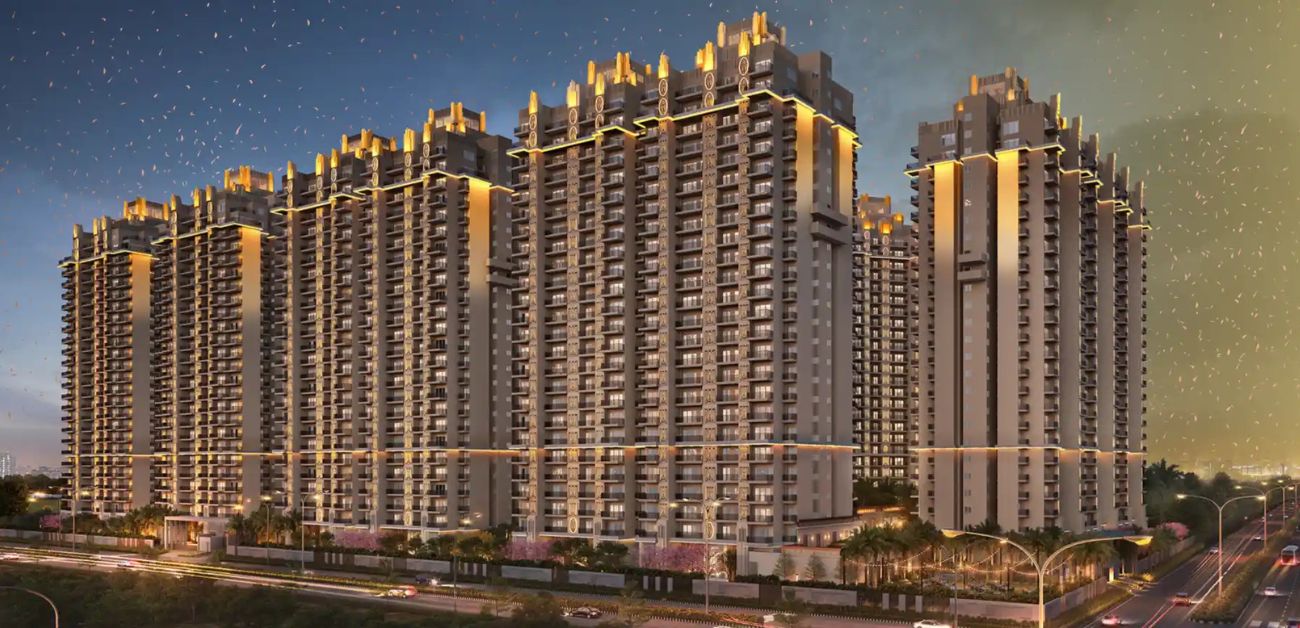
The real estate landscape of Raj Nagar Extension has evolved from a relatively unknown outskirts zone into one of the most discussed affordable housing destinations in NCR. Positioned within Ghaziabad and influenced by its proximity to Delhi, this micro-market reflects a mix of opportunity and caution. Over the years, rapid residential expansion, improving connectivity, and competitive pricing have attracted thousands of homebuyers. At the same time, challenges such as infrastructure gaps, high-density development, and uneven project quality continue to shape buyer perception.
This Raj Nagar Extension real estate guide breaks down the real estate ecosystem of Raj Nagar Extension by covering its geography, connectivity, commercial growth, infrastructure reality, and future outlook—helping buyers understand not just what is promised, but what actually exists on the ground.
Geographical Positioning and Spatial Importance
Raj Nagar Extension sits along a strategic growth corridor that connects Ghaziabad with western Uttar Pradesh while maintaining accessibility to Delhi. Its location has made it a natural extension for residential expansion as central areas became saturated and expensive.
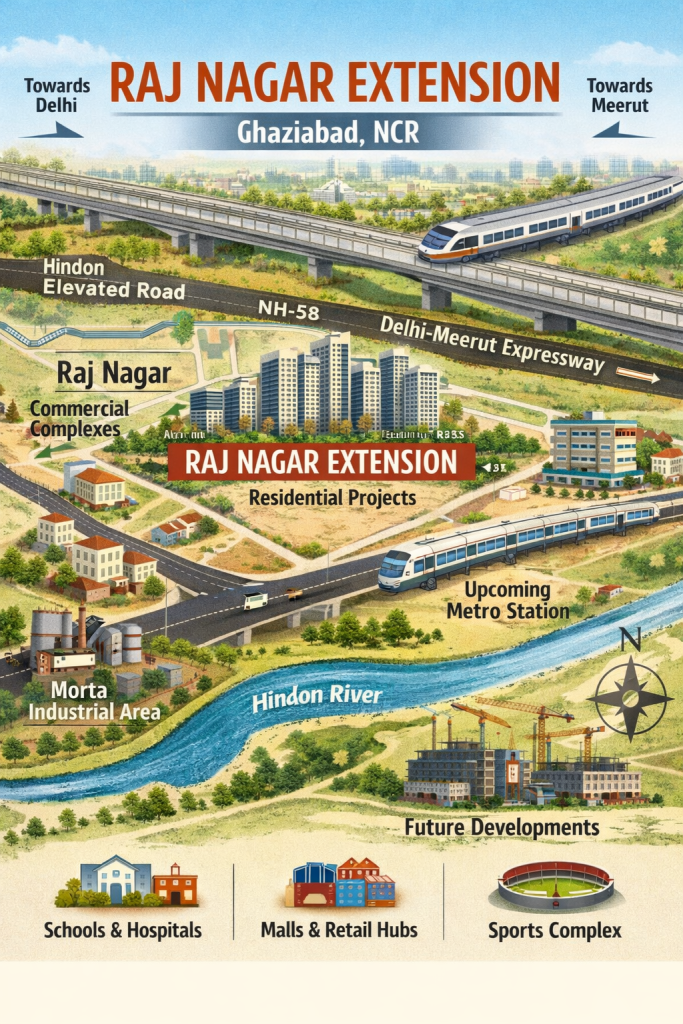
Raj Nagar Extension in Ghaziabad buffers Delhi’s urban sprawl from the Meerut corridor along NH-58. Just 10-15 km from Delhi borders via Hindon routes, it pulls migrants seeking space without Mumbai-level premiums. Flat terrain suits high-rises, but low patches flood during monsoons, turning roads into rivers—check plot elevations before booking.
Micro-location Dynamics
The area is surrounded by established zones like Raj Nagar and developing belts near industrial clusters, creating a blend of residential and semi-commercial surroundings. This positioning supports daily commuting while still offering relatively quieter living spaces.
Its micro-dynamics blend developed Raj Nagar neighborhoods with Morta industries and Hindon River greens. Converted farmland now packs group housing, but uneven grading creates water traps. Buyers gain bigger carpets (900sqft 2BHKs common) versus Noida’s tight layouts, though industrial proximity means diesel truck fumes at dawn.
Terrain and Land Characteristics
The terrain is largely flat, which has enabled large-scale high-rise construction. However, certain pockets are low-lying, which can influence drainage and water management, especially during heavy monsoon periods.
Connectivity and Transport Infrastructure
Connectivity has been one of the strongest catalysts for growth in this micro-market. Improved road networks have gradually transformed accessibility and reduced travel time to Delhi and other NCR regions.
Road Network Advantage
Delhi-Meerut Expressway transformed access, slashing 45-minute jams to 10 minutes toward Delhi’s heart. Hindon Elevated Road funnels traffic smoothly, linking to Outer Ring Road for airport runs under 45 minutes. Planned 24m-60m internals promise future flow, but peak hours still choke at single entries.
Major expressways and arterial roads link the area to key NCR zones. The development of elevated corridors has played a significant role in reducing congestion and improving travel efficiency.
Future Transport Developments
Upcoming regional rail systems and road expansion projects are expected to further enhance connectivity. These developments may influence property demand over time, though their impact will depend on execution timelines. RRTS regional rail stations nearby will plug Meerut-Ghaziabad-Delhi in 30 minutes by late 2026, boosting daily commuters. Eastern Peripheral eases loops around Delhi, yet last-mile relies on autos and e-rickshaws—public buses lag, forcing car dependence that spikes parking wars in societies
Urban Planning and Development Pattern
Raj Nagar Extension was originally envisioned as a planned residential extension but has evolved into a dense cluster of high-rise housing due to developer activity.
Planned vs Actual Growth
While initial plans focused on balanced development, rapid construction has led to increased density, putting pressure on infrastructure and public services. Planners eyed low-density extension, but developers piled high-rises chasing FAR limits, creating vertical clusters over scattered plots. Group housing dominates with pockets of shops, while mixed-use towers sprout retail bases. Density strains sewers, evident in choked drains during rains.
Land Use Distribution
Land use tilts residential 80%, commercial 15%, greens minimal—high FAR verticality maximizes plots but shadows lower floors. Civic upgrades trail housing boom, leaving gaps in waste pickup and streetlights that dim post-9 PM. The area is primarily dominated by group housing projects, with limited but gradually expanding commercial zones. Mixed-use development is emerging but still in early stages.
Residential Real Estate Landscape
The housing market here is driven by affordability and availability of larger apartment configurations compared to other NCR regions.
Housing Typology
Most developments consist of multi-storey apartment complexes offering 2BHK and 3BHK units, catering to middle-income buyers seeking space within budget. 2BHK and 3BHK high-rises define stock, with 1,000-1,500sqft carpets luring families from Delhi’s 700sqft shoeboxes. Mid-income positioning under ₹1 crore competes with Crossings Republik’s similar vibe but edges on size. Few premium towers test ₹10,000/sqft, signaling uptick.
Market Positioning
Raj Nagar Extension is positioned as a value-driven market, attracting first-time homebuyers and families shifting from more expensive localities. Over 40 developers, mostly NCR mid-tiers, flooded launches—affordable tags drew investors early, now shifting end-users as RERA enforces timelines. Quality varies; sample flats reveal thin walls in budget builds.

Commercial Real Estate and Retail Growth
Commercial development in the area is closely linked to residential expansion, with demand primarily driven by the local population. Residential base of 50,000+ families drives high-street shops and local markets for groceries, pharmacies. Malls emerge at expressway junctions, serving weekend crowds from nearby townships. End-user shops thrive on daily needs, lacking corporate anchors.
Retail Ecosystem
High-street retail, daily convenience stores, and small commercial complexes form the backbone of the commercial landscape, catering to immediate needs. Retail hubs cluster near main roads, with supermarkets and clinics filling gaps. Demand stays consumption-led, not office-driven—IT hubs absent keeps rentals grounded.
Growth Potential
As population density increases, demand for organized retail, healthcare services, and entertainment spaces is expected to grow steadily.
Pricing Trends and Investment Dynamics
Property pricing in Raj Nagar Extension remains one of its biggest attractions, especially for budget-conscious buyers.
Affordability Factor
Compared to nearby micro-markets, property rates are relatively lower, allowing buyers to purchase larger homes within limited budgets. Price-sensitive first-timers dominate, snapping ₹50 lakh homes with ₹5 lakh down payments. Investors flipped early phases for 20% gains; now end-users stabilize as supply digests. Appreciation crawls at 5-8% yearly, capped by oversupply and infra waits.
Investment Outlook
Price appreciation has been moderate due to oversupply, but long-term growth potential exists if infrastructure development keeps pace with expansion. Rentals yield 2.5-3.5%—₹18,000-25,000 for 2BHKs from Delhi workers. Affordability rules over luxury rents.
Infrastructure and Civic Facilities
Infrastructure development in the area is evolving, but it has not always kept up with the pace of residential growth.
Basic Civic Services
Water supply, sewage systems, and waste management facilities vary across societies. Some projects have better internal infrastructure, while others depend heavily on external systems. Road expansions like 60m corridors underway improve flows, but sewage lags population—overflows common in monsoons. Waste management spotty, with open dumps near fringes.
Utilities and Services
Electricity supply is generally stable, but most societies rely on backup systems to ensure uninterrupted services. Utilities lean on borewells amid municipal shortages; societies mandate power backups for 2-hour cuts routine in summers.
Social Infrastructure and Livability
The quality of life in any residential area depends heavily on access to education, healthcare, and daily conveniences.
Education and Healthcare
Schools and small clinics are present in and around the locality, but larger hospitals and premium institutions may require travel to other parts of Ghaziabad. Local schools handle basics, but premium DPS or Ryan types sit 5-10km in Raj Nagar core. Healthcare leans on Ghaziabad hospitals—emergency runs take 20 minutes.
Lifestyle and Convenience
Retail outlets, local markets, and essential services are gradually improving, supporting day-to-day living needs. Daily retail covers kiranas and eateries; evolving malls bring multiplexes by 2027.
Environmental and Sustainability Factors
Environmental conditions play a crucial role in long-term livability and sustainability.
Air and Noise Conditions
Being part of NCR, the area is affected by seasonal air pollution and construction-related dust, which buyers should consider. NCR smog blankets winters (AQI 300+), worsened by construction dust from endless cranes. Borewell over-reliance depletes groundwater, risking dry taps in peak summer.
Water and Drainage
Dependence on groundwater and occasional drainage issues highlight the need for sustainable water management systems. High-rises trap heat, amplifying urban island effects—few projects add podium greens.
Demand Drivers and Buyer Profile
The demand for property in Raj Nagar Extension is largely driven by affordability and connectivity.
Primary Buyer Segments
First-time homebuyers, middle-income families, and individuals relocating from Delhi form the core buyer base. GDA oversees master plans, UP RERA polices 100+ projects for transparency and refunds. Faster approvals boost supply, but execution stalls civic links.
End-User Dominance
RERA cut delays, yet infra trails housing pace. The market has gradually shifted from investor-driven to end-user-driven demand, indicating more stable occupancy levels.
Supply Dynamics and Market Competition
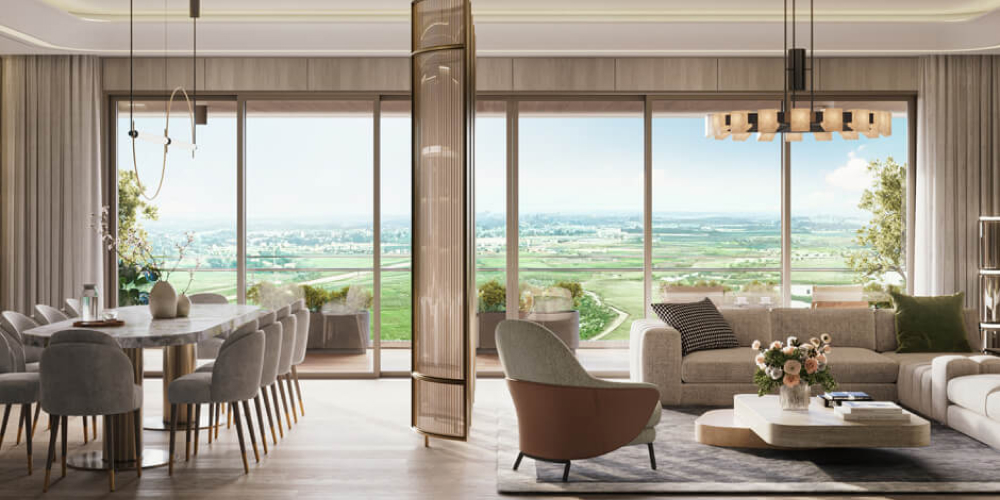
A large number of projects have been launched over the years, creating a competitive market environment. Oversupply from 50+ launches stagnates select pockets at ₹5,800/sqft lows. Premium shifts emerge, like ₹700 crore low-density plays hinting maturation.
Inventory Levels
High inventory levels have kept prices relatively stable, offering buyers multiple options to choose from. Inventory digests slowly amid rate hikes.
Shift in Development Trends
Recent developments show a gradual shift toward better planning, improved amenities, and lower density projects.
Future Growth Drivers
The future of Raj Nagar Extension depends on infrastructure execution and overall NCR expansion.
Infrastructure Expansion
Road widening, transport projects, and civic upgrades are expected to improve the overall appeal of the area. Four new roads and 60m widenings unlock traffic; multi-sports complexes near Hindon boost lifestyle. Logistics hubs along expressway stir economy. RRTS stations promise rail revolution.
Urban Spillover Effect
As nearby markets become saturated, demand is likely to shift toward more affordable zones like Raj Nagar Extension.
Risk Factors Buyers Must Consider
Every real estate investment comes with certain risks, and understanding them is essential for making informed decisions. Infra lags spawn water shortages, builder delays hit 20% projects per RERA logs. Waterlogging drowns low zones; oversupply slows resales
Infrastructure Lag
Rapid construction without matching infrastructure can affect long-term livability.
Builder Quality Variations
ifferences in construction quality across projects mean buyers must carefully evaluate each property.
Comparison with Nearby Markets
Raj Nagar Extension stands out for affordability but differs significantly from more developed areas.
Competitive Positioning
Compared to premium locations, it offers larger homes at lower prices but lacks fully developed infrastructure.
| Area | Avg Price/sqft | Connectivity | Infra Maturity |
| Raj Nagar Ext | ₹6-9k | Expressway strong | Developing |
| Indirapuram | ₹10-14k | Metro ready | High |
| Noida Ext | ₹7-10k | Upcoming metro | Medium |
Value Proposition
The area appeals to buyers prioritizing budget over immediate lifestyle benefits.
Long-Term Real Estate Outlook
The long-term performance of this micro-market will depend on how well infrastructure and planning evolve.
Positive Indicators
Connectivity improvements and growing population support long-term demand. Strategic NCR perch and infra pipeline lift prospects for patient holders eyeing 8% compounded returns. Oversupply and spotty quality cap short flips. End-users win most.
Challenges Ahead
Sustained growth will require better civic planning, infrastructure upgrades, and controlled development. Brochures paint “smart city” gloss over potholes and tanker queues. Lifestyle hype ignores density strains—reality rewards site visits over sales tours.
Read our buyers’ guide that helps you buy property anywhere in India.

If you are interested in buying flat in Raj Nagar Extension, check this 50-Point Flat Inspection Checklist for better decision making.
Conclusion: A Balanced Perspective for Buyers
Raj Nagar Extension represents a real estate market that is still in transition. It offers clear advantages in terms of affordability, space, and improving connectivity, making it attractive for budget-conscious homebuyers. At the same time, challenges related to infrastructure, density, and project quality cannot be ignored.
For end-users willing to prioritize space and cost over immediate luxury, the area can offer meaningful value. For investors, patience and careful project selection are essential. Ultimately, the decision to invest here should be based on a clear understanding of both current realities and future potential, rather than marketing promises alone.